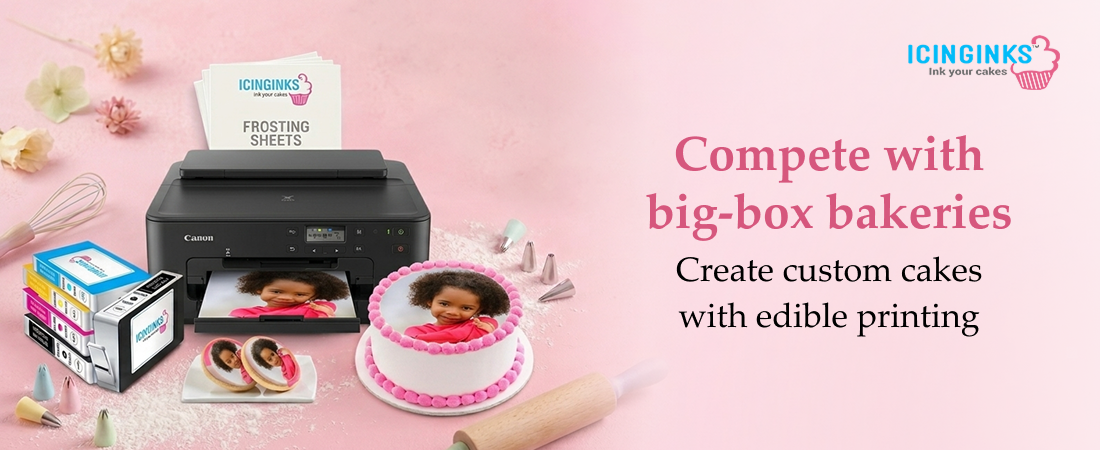
Big-box bakeries have the advantage of large production facilities, established supply chains, and standardized cake designs. However, small bakeries have their own strengths. They can offer personal service, unique designs, and custom cakes created around individual customer preferences.
Technology is helping independent bakeries make the most of these advantages. An edible image printer allows bakers to print photographs, names, logos, illustrations, and other designs using edible ink. These printed images can be applied to suitable cakes and desserts, giving customers more ways to personalize their orders.
For small bakeries, edible printing can support a wider product range without requiring every detail to be created by hand. From birthday cakes and graduation desserts to corporate treats and themed cupcakes, it provides another way to meet customer expectations while maintaining the bakery's own creative style.
Why Small Bakeries Are Investing in Edible Printing
Customers often want cakes that reflect a particular person, occasion, or event. A birthday customer might request a family photograph, while a business may need a cake featuring its logo. Parents may want a themed cake for a child's party, and couples may prefer personalized designs for an anniversary.
Creating these designs by hand can require considerable time, especially when the artwork contains detailed photographs, small text, or several colors.
An edible printer helps bakeries handle these requests by reproducing suitable digital artwork on edible materials. Rather than manually recreating every visual detail, decorators can prepare the design digitally and focus their hands-on work on assembling, frosting, and finishing the cake.
This can be particularly helpful for independent businesses that want to offer more customization without building a large decorating team.
Meeting Customer Expectations for Custom Cakes
Customers increasingly look for products that feel personal to their celebrations. A bakery that offers photo cakes, personalized messages, and branded desserts can serve a broader range of occasions.
Using an edible ink printer can help a bakery create these designs consistently, provided the image file, printing material, and equipment are suitable for the job.
For example, a bakery could offer personalized birthday cakes with photographs, graduation cakes with school colors, or anniversary cakes with a couple's chosen image. These options give customers more choice while allowing the bakery to maintain its own decorating standards.
1. Create Personalized Cakes Without Reproducing Every Detail by Hand
One of the most practical uses of an edible image printer is reproducing detailed artwork that would otherwise take considerable manual effort.
A customer might request a cake featuring a photograph, a company logo, or an illustration with several colors. The bakery can prepare the digital file, resize it to suit the cake, print it using compatible edible ink and media, and apply the finished image according to the material's instructions.
This approach is useful for:
- Birthday cakes featuring photographs and personalized messages
- Graduation cakes with names, school colors, and class-year designs
- Wedding and anniversary cakes featuring photographs or custom artwork
- Corporate cakes featuring approved company logos
- Cupcakes and cookies decorated with coordinated printed designs
Printing does not eliminate the need for decorating skills. Bakers still need to prepare the cake, select appropriate frosting, apply the image correctly, and finish the design. However, it gives them another way to reproduce intricate artwork while concentrating on the overall presentation.
2. Improve Production Planning During Busy Seasons
Small bakeries often have limited staff, workspace, and decorating time. During busy periods such as graduation season, Valentine's Day, Mother's Day, and the winter holidays, multiple personalized orders can arrive together.
Printing can help separate some design preparation from the rest of the cake-making process. A decorator can prepare artwork and print suitable sheets while another team member bakes cakes, prepares frosting, or assembles orders.
For repeat designs, such as corporate logos or coordinated party decorations, a bakery may also be able to standardize parts of its workflow.
The actual time saved depends on the design, printer, material, number of orders, and finishing work involved. Bakers should test the complete process before promising faster turnaround times to customers.
Use Digital Files to Organize Custom Orders
A simple digital workflow can make personalized cake orders easier to manage.
- Collect the customer's image, message, dimensions, and design preferences.
- Check image quality, spelling, dimensions, and permissions.
- Prepare a proof for the customer to approve.
- Print the approved design using compatible equipment and edible materials.
- Apply the image and complete the cake decoration.
- Check the finished product before collection or delivery.
A consistent process can reduce avoidable errors and help customers understand what information they need to provide when ordering a custom cake.
3. Expand Beyond Traditional Photo Cakes
An edible printer for cake applications can support more than standard round cakes with photographs. Depending on the printer and compatible materials, bakeries may also create printed decorations for cupcakes, cookies, and other confectionery products.
This gives businesses opportunities to test new products without changing their entire production setup.
For example, a bakery could offer matching cupcakes for a birthday cake, logo cookies for a business event, or coordinated desserts for a themed celebration. The printed elements can help keep the designs consistent across multiple products.
Explore Small-Batch and Niche Products
Independent bakeries can use customization to differentiate themselves from businesses that focus mainly on standardized designs.
Possible offerings include:
- Personalized cupcakes for birthdays and office celebrations
- Logo cookies for business events
- Photo decorations for family celebrations
- Coordinated dessert collections for themed parties
- Custom cake decorations for graduations and anniversaries
Before adding any product, test the printing surface, image appearance, handling requirements, and storage conditions. Not every edible printing material works with every type of dessert.
4. Understand the Difference Between Edible Paper and Other Printing Materials
Choosing the right printing surface is essential for producing attractive decorations. Edible paper is a broad term used for materials designed for edible printing, but different types of sheets have different properties.
The right material depends on the printer, the design, and how the decoration will be applied.
Frosting Sheets for Detailed Cake Images
Frosting or icing sheets are commonly used for photographic cake decorations and detailed printed artwork. They are designed for suitable edible printing systems and can be applied to compatible cake surfaces.
They may be useful for photographs, logos, illustrations, and personalized messages. Bakers should check the product instructions for printing, handling, application, and storage.
Wafer Paper for Lightweight Decorations
Wafer paper is lightweight, thin, and slightly translucent. It is commonly used for decorative shapes, printed designs, and selected confectionery applications.
Its texture and appearance differ from frosting sheets, so it may not produce the same visual result for every photograph or design. Bakers should choose the material based on the intended decoration rather than treating all edible sheets as interchangeable.
Check Compatibility Before Printing
An edible image paper product must be compatible with the printer and intended application. Sheet thickness, surface texture, feeding requirements, and moisture sensitivity can affect printing results.
Before producing a customer order, test the material with the selected printer and follow the manufacturer's instructions. This helps the bakery assess image quality and handling before using the design on a finished dessert.
5. Choose the Right Edible Ink and Cartridges
The printing system is only one part of an edible printing setup. The ink and cartridge must also be suitable for the printer and intended food application.
Edible ink is formulated for edible printing and differs from ordinary printer ink. Bakeries should use the specified food-grade printing supplies and follow the manufacturer's instructions for use and storage.
An edible ink cartridge supplies ink to a compatible printer. Cartridge compatibility can depend on the printer model, cartridge design, and other manufacturer-specific requirements.
Why Printer Compatibility Matters
Not every cartridge or refill works with every printer. Using an incompatible supply can lead to printing problems, poor output, or equipment issues.
Before purchasing an edible ink printer, check the following:
- Exact printer model and supported cartridges
- Compatible ink formulation
- Suitable edible sheets and media
- Manufacturer instructions for setup and maintenance
- Availability of replacement supplies
A bakery should also keep edible printing equipment dedicated to its intended use. A printer previously used with ordinary ink should not simply be repurposed for edible printing because of potential contamination.
Plan for Replacement Supplies
Ink, cartridges, and printing sheets are recurring operating costs. Bakers should account for these materials when pricing personalized products.
The cost of a print may vary depending on image coverage, sheet size, ink consumption, test prints, and rejected sheets. Tracking these costs can help a bakery price custom decorations more accurately.
6. Consider a Direct-to-Food Printer for Specific Applications
A direct to food printer works differently from a conventional sheet-based edible printing setup.
A sheet-based printer creates an image on a compatible edible sheet, which is then applied to the dessert. A direct-to-food system deposits edible ink directly onto a suitable food surface, provided the product's shape, height, texture, and material are supported by the machine.
For bakeries that primarily produce photographic cake decorations, a sheet-based setup may be more appropriate. Businesses interested in direct printing on suitable cookies or other confectionery items may want to investigate a machine specifically designed for those applications.
Questions to Ask Before Buying
When comparing an edible printing machine with a direct-to-food system, consider:
- Which products will the machine print on?
- Does it support the size and shape of the items being decorated?
- What consumables and maintenance are required?
- How much production capacity does the bakery need?
- Can the machine reproduce the level of detail customers expect?
- What training and technical support are available?
The most suitable equipment is the one that matches the bakery's actual products, order volume, budget, and workflow.
7. Calculate the Cost of Producing Custom Decorations
Buying equipment does not automatically make custom cake production more profitable. A bakery should understand the cost of producing each usable print and the labor involved in completing the decoration.
Costs may include:
- Printer purchase and setup
- Edible ink and replacement cartridges
- Edible paper and other compatible materials
- Cleaning supplies and maintenance
- Test prints and production waste
- Design preparation and finishing time
A simple calculation can help determine whether a new service is financially practical.
First, estimate the ink and sheet cost for a typical design. Add the cost of waste, labor, and other production expenses. Then compare the total with the selling price of the finished cake or decoration.
For example, if a bakery regularly receives orders for photo cakes, it can compare the cost and time involved in printing images in-house with the cost of sourcing similar decorations externally.
The result will depend on the bakery's order volume, supply costs, equipment, and pricing. It is better to use actual production records than assume a fixed payback period for the printer.
8. Use Custom Cake Printing to Develop New Revenue Opportunities
An edible image printer can give a bakery more ways to serve existing customers and attract orders for specialized occasions.
For example, a bakery that already sells celebration cakes could test add-on cupcakes with matching printed designs. A business that serves local companies might offer cakes and cookies featuring approved logos for meetings, launches, and employee celebrations.
These additional products can make it easier to offer coordinated designs across a customer's order.
Test Demand Before Expanding Your Menu
Before investing heavily in new products, a bakery can create a small selection of sample designs and ask customers for feedback.
Track which products generate inquiries, which designs sell, how much production time they require, and whether the selling price covers the full cost.
This helps the bakery identify which applications are worth keeping and which are less practical for its customers.
9. How Small Bakeries Can Choose the Best Edible Printer
There is no single printer that suits every bakery. The best choice depends on the products being made, the level of customization required, and the available budget.
A bakery focused on photo cakes may prioritize print quality, compatible frosting sheets, and reliable ink supplies. A business producing many personalized cookies may need to investigate equipment suited to that specific workflow.
When comparing the best edible printer for cakes, consider the following:
- Print quality: Can it reproduce photographs, fine details, and small text clearly?
- Compatibility: Which cartridges, inks, and sheets does it support?
- Capacity: Can it handle the bakery's typical order sizes?
- Operating costs: What will replacement supplies and maintenance cost?
- Ease of use: Can staff learn the printing and application process?
- Support: Are product instructions and technical assistance available?
An edible photo printer may be suitable for businesses that frequently print photographs, while an edible cake topper printer may suit bakers who regularly prepare printed decorations. These terms describe intended uses, not a guarantee that a particular printer will support every material or application.
A practical way to compare an edible cake image printer is to test it using the same design and compatible sheet across the options being considered. Compare the image quality, handling, time required, and cost per usable print before making a purchase.
10. Build a Reliable Workflow for Personalized Orders
Equipment alone does not make a bakery competitive. Customer communication, consistent quality, and dependable order management remain important.
Bakeries can make custom printing easier to manage by establishing a clear process for receiving images, approving artwork, confirming deadlines, and preparing finished orders.
Set Clear Artwork Requirements
Tell customers which file types and image quality levels are suitable. Confirm the intended dimensions and request approval before printing. This is particularly important for company logos, photographs, and designs containing small text.
Bakeries should also obtain any necessary permissions to reproduce customer-supplied photographs, logos, or protected artwork.
Maintain Consistent Quality and Food Safety
Use compatible edible printing supplies and follow the equipment manufacturer's instructions. Store ink, cartridges, and sheets as directed, keep printing equipment dedicated to edible applications, and establish procedures for cleaning and handling materials.
Check the final decoration for image quality, correct spelling, and suitable application before completing the order. Clear communication about ingredients and allergen information should remain part of the bakery's normal food-safety practices.
How Icinginks Helps Bakeries Explore Edible Printing
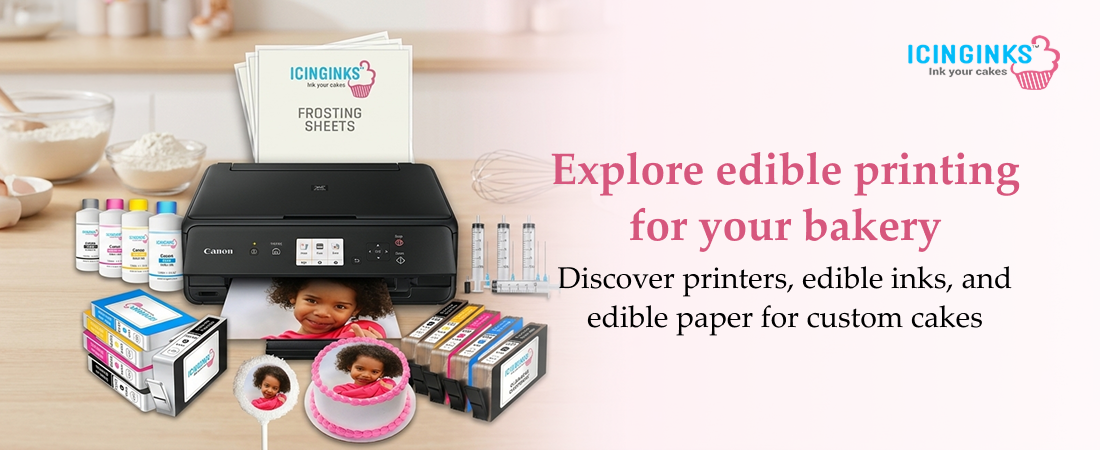
At Icinginks, we understand that small bakeries need practical tools and reliable supplies to create personalized desserts for their customers. We offer edible printing products and supplies that help bakers explore different ways to produce custom cake decorations.
Our range includes edible printing equipment, edible ink cartridges, ink refills, frosting sheets, wafer paper, and other printing supplies. Whether you are exploring your first edible printing setup or looking for compatible replacement materials for an existing printer, we encourage you to choose products that match your equipment and intended applications.
We believe that the right combination of printing equipment, compatible edible ink, and suitable printing sheets can help you develop your custom cake offerings and test new product ideas.
Visit Icinginks to explore our edible printing products and supplies. We invite you to compare available options, check product compatibility, and find the materials that best fit your bakery's needs.
Frequently Asked Questions
What is an edible image printer?
An edible image printer is a printing system that uses compatible edible ink to reproduce designs on edible sheets or, with suitable equipment, directly on certain food products. Bakeries commonly use these systems for personalized cake decorations, photographs, logos, and other custom designs.
How can an edible printer help a small bakery compete with larger bakeries?
An edible printer can help a small bakery offer personalized designs, reproduce detailed images, and expand its selection of custom desserts. Its value depends on customer demand, operating costs, print quality, and the bakery's ability to manage production efficiently.
What is the difference between edible paper and frosting sheets?
Edible paper is a broad term for printable edible materials. Frosting sheets are commonly used for detailed cake images, while wafer paper is lightweight and slightly translucent and is suitable for different decorative applications. Always check the material's intended use and printer compatibility.
Can an edible ink printer print directly on cakes?
A conventional sheet-based edible ink printer generally prints on compatible edible sheets that are then applied to cakes. Direct printing requires a machine specifically designed for the food surface and application. Not every edible printing system can print directly onto a cake.
What should bakeries check before buying an edible ink cartridge?
Check the exact printer model, cartridge compatibility, ink specifications, and supplier instructions. Do not assume that a cartridge or refill intended for another printer will work with your equipment.
Is edible printing suitable for cookies and cupcakes?
It can be, depending on the printer, the compatible edible material, and the product surface. Sheet-based printing can be used to prepare decorations for suitable cookies and cupcakes, while direct printing requires equipment designed for the specific application.
Does an edible printer replace traditional cake decorating?
No. An edible image printer can reproduce detailed photographs, text, and illustrations, but bakers still need to prepare the dessert, apply the image correctly, and finish the design. Printing is an additional decorating method rather than a complete replacement for traditional skills.
How can a bakery estimate the cost of edible printing?
Include the cost of ink, cartridges, edible sheets, test prints, waste, maintenance, and staff time. Compare the total production cost with the price customers will pay for the finished decoration or cake. Actual costs depend on the printer, materials, and order volume.
Similar Post:
Why Every Home Baker Should Invest in an Edible Cake Printer
Multi-Function Printers vs. Dedicated Edible Cake Printers: Which Is Right for You?
How To Extend the Life of Your Edible Cake Printer
Essential Tips for Edible Printer Maintenance – A Must-Read!
Things to Consider Before Buying an Edible Printer for Cakes