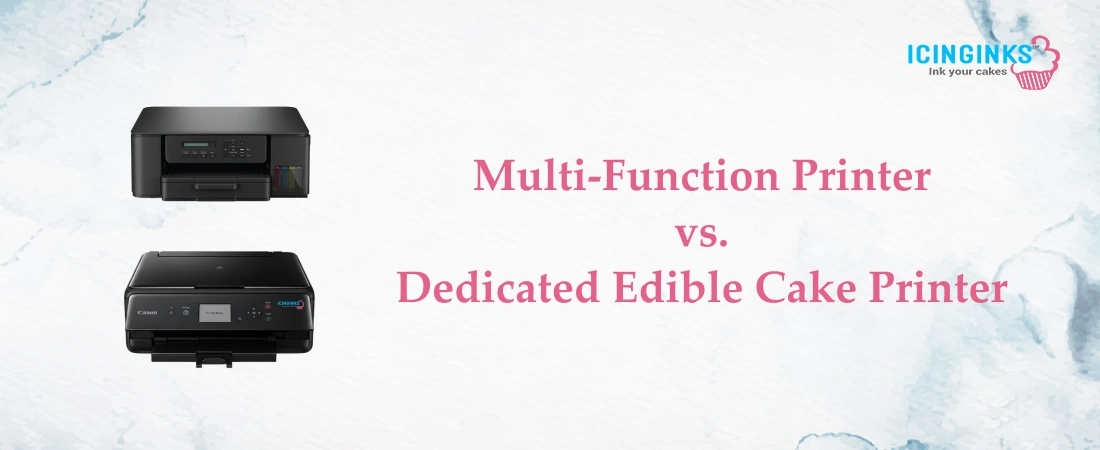
Whether you are a passionate home baker stepping into the world of custom cake decorating or a professional running a bustling bakery, one question keeps coming up: should you invest in a multi-function printer converted for edible use, or go all-in with a dedicated edible cake printer? Both options have their own strengths, limitations, and best-fit scenarios, and the wrong choice can cost you time, money, and a lot of wasted frosting sheets.
"Every cake tells a story; make sure yours is printed perfectly."
Take a moment to walk through what actually matters, and the right choice will be clear.
What exactly is an Edible Cake Printer?
Before diving into the comparison, let us clarify what we are working with. An edible cake printer is a printer, either a modified multi-function model or a purpose-built machine, that uses food-safe, FDA-compliant edible inks to print images, designs, and text directly onto edible media such as frosting sheets, wafer paper, or sugar sheets. These printed designs are then transferred onto cakes, cookies, cupcakes, and other baked goods, turning ordinary treats into personalized works of art.
The magic lies not just in the hardware but in the ink. Unlike regular printer ink, which is toxic and absolutely not safe for consumption, edible ink is made from food-grade dyes and ingredients. This distinction is critical and must never be overlooked.
Multi-function printers: the flexible all-rounder
Multi-function printers (MFPs) are standard inkjet printers that have been adapted for edible printing by replacing regular ink cartridges with edible ink printer cartridges. Models from brands like Canon and Epson are commonly used for this purpose, particularly in home baking and small-scale bakery settings.
Advantages of multi-function printers:
- Cost-effective entry point
MFPs are generally more affordable upfront. For hobbyist bakers or those just starting out, a converted multi-function machine allows them to explore edible printing without a large financial commitment. - Dual functionality
These printers can technically serve other purposes, though it is strongly advised that once a printer is used for edible printing, it should never be switched back to regular ink due to contamination risks. - Wide availability
Compatible models are easy to find, and replacement edible cartridges are readily available. - Ease of use
Familiar interface for most users, especially those already comfortable with standard inkjet printing.
Limitations of multi-function printers:
- Not purpose-built
These machines were designed for paper, not edible media. Feeding thick frosting sheets or wafer paper through them requires care and can lead to jams or print misalignments. - Lower precision for edible media
Print quality, while often acceptable, may not match the vibrancy or sharpness of a purpose-built system. - Maintenance challenges
Edible ink can dry out and clog printheads faster than regular ink. Frequent maintenance and cleaning cycles are necessary. - Limited format sizes
Most MFPs are restricted to standard paper sizes, which can limit your creative range.
Dedicated edible printers: built for the bakery
A dedicated edible ink printer is engineered from the ground up for food printing. These machines are designed to handle edible media specifically, offering precision, consistency, and features tailored to the baking industry.
Advantages of dedicated edible printers:
- Superior print quality
Dedicated systems produce sharp, vibrant, and consistent prints on frosting sheets and wafer paper, ensuring that every image pops on your cake canvas. - Optimized media handling
Designed to feed edible sheets smoothly without jams or damage, which is a persistent pain point with converted MFPs. - Professional-grade output
For bakeries and cake-decorating businesses handling high volumes, dedicated machines deliver the reliability and consistency clients expect. - Reduced contamination risk
Since these machines have never and will never use regular ink, the food safety risk is significantly minimized. - Longer operational life for edible use
Built to handle the demands of edible printing regularly, meaning fewer breakdowns and maintenance headaches.
Limitations of dedicated edible printers:
- Higher upfront investment
These machines cost a premium, which may be a barrier for casual home bakers.< - Single-purpose use
Unlike an MFP, these cannot be repurposed for other printing needs.
Head-to-Head: Choosing Based on Your Needs
The decision really comes down to where you are in your baking journey. A hobbyist baker who occasionally decorates cakes for birthdays and family gatherings does not need to spend a fortune on professional-grade equipment.
A converted multi-function edible cake printer gets the job done, prints are decent, and the overall setup is manageable. But the moment you start taking orders, working with clients, or scaling your output, the cracks begin to show. Inconsistent prints, frequent clogs, and the constant worry of media jams are the last things you want when you have a deadline and a dozen custom cake orders waiting.
A dedicated edible ink printer, on the other hand, is built for exactly that kind of pressure. It handles volume, maintains color accuracy across batches, and gives you the confidence to offer edible printing services without second-guessing your equipment. Think of it this way: a multi-function printer is a great starting point, but a dedicated machine is what keeps a baking business running smoothly day after day.
The role of edible printing services in today's baking world
Not every baker wants to own and maintain a printer, and that is perfectly valid. Edible printing services have grown tremendously in popularity, allowing bakers and consumers to order pre-printed edible images without investing in equipment. These services are ideal for one-off occasions, small orders, or simply when the volume does not justify owning a machine.
That said, for anyone running a bakery business, relying on external edible printing services can eat into margins and slow turnaround times. Bringing printing in-house, even with a converted MFP, often makes more financial and operational sense in the long run.
What about ink and supplies? The unsung hero of edible printing
Regardless of whether you choose a multi-function or dedicated printer, the quality of your edible ink printer cartridges and supplies will make or break your results. Inferior edible inks can produce dull colors, fade quickly, or, worse, fail to meet food safety standards.
Always prioritize FDA-compliant, Kosher-certified edible inks and pair them with high-quality frosting sheets or wafer paper for the best outcomes.
Printer choice is only half the equation. The supplies you use are just as important as the machine itself.
Why Icinginks Is the Baking World's Trusted Choice
"Great baking starts with the right tools and the right partner."
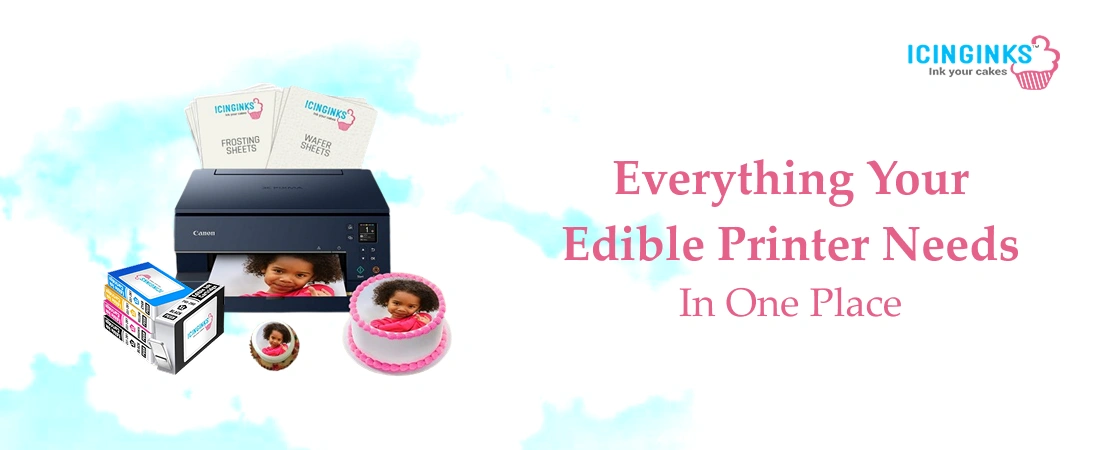
Icinginks is not just a supplier; it is a complete edible printing ecosystem built around quality, safety, and simplicity. Whether you are setting up your first edible cake printer or scaling up your bakery's edible printing services, everything you need is right here.
Here is what sets us apart:
-
FDA-compliant, Kosher-certified edible ink printer cartridges compatible with Canon and Epson models
-
Premium frosting sheets, wafer papers, and sugar sheets for beautiful, consistent prints
-
Direct-to-food professional printers for high-volume setups
-
Vibrant, true-to-life edible inks that make every decoration a showstopper
-
Custom pre-printed edible image services for ready-to-use designs
-
Refill inks, cleaning solutions, and accessories to keep things running smoothly
-
Dedicated customer support that bakers actually rely on
You know what printer you need. Now you know where to get everything else. Shop Icinginks today and give your baking the quality it deserves.
FAQs
Q1. Can I use any inkjet printer as an edible cake printer?
Not all inkjet printers work equally well. The most popular choices are specific Canon and Epson models that are compatible with edible ink cartridges. Always check compatibility before purchasing a printer for edible use, and never use a printer that has previously used regular ink.
Q2. Is edible ink safe to eat?
Yes, as long as you use FDA-compliant edible inks from a reputable supplier. These inks are made from food-grade dyes and ingredients, making them completely safe for consumption when used correctly.
Q3. How often do I need to maintain my edible ink printer?
Edible ink tends to dry out faster than regular ink. It is recommended to print at least once every few days to keep the printhead from clogging. Regular cleaning cycles and the use of a printhead cleaning solution will also significantly extend your printer's life.
Q4. What edible media can I print on?
You can print on frosting sheets, wafer paper, sugar sheets, and chocolate transfer sheets. Each medium has different properties and works best for specific applications; frosting sheets for cakes, wafer paper for delicate decorations, and so on.
Q5. Does Icinginks offer edible printing services for custom orders?
Yes! We offer custom printed frosting sheets, wafer sheets, cookies, cocktail toppers, and more. You can upload your design, have it printed, and delivered directly to your door; perfect if you are not yet ready to invest in your own printer setup.
Similar Post:
A4 vs. A3 Edible Ink Printers: Which One is Right for You?
Edible Printing on a Budget: Cost-Effective Tips and Tricks
Here’s How You Can Cut Fondant with Cricut in Easiest Steps
Choosing the Right Edible Printer Bundle: A Beginner's Guide