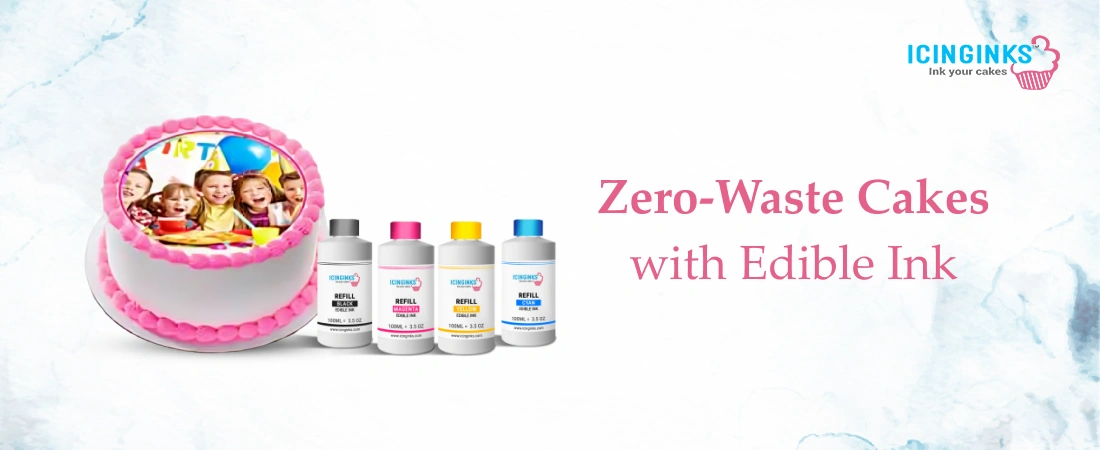
The baking world is experiencing a quiet revolution, one that is as delicious as it is responsible. As sustainability becomes a priority across industries, cake decorators and professional bakers are asking a powerful question: how do we create stunning, personalized cakes without generating mountains of waste? The answer is turning out to be sweeter than anyone expected, and it starts with edible ink.
Edible ink technology has evolved dramatically over the past decade. What was once a novelty reserved for high-end bakeries is now accessible to home bakers, boutique cake artists, and large-scale operations alike. More importantly, the shift toward eco-conscious edible printing is helping reduce excess materials, cut down on decorating waste, and eliminate the need for plastic figurines, synthetic dyes, and non-biodegradable embellishments.
From Piping Bags to Pixels: The Rise of Edible Printing
Traditional cake decorating involves a lot of trial and error. Fondant gets rolled out and trimmed, buttercream flowers are piped and discarded when imperfect, and store-bought plastic toppers end up in landfills after the candles are blown out. Edible printing sidesteps much of this waste by transferring a design directly onto a frosting sheet, wafer paper, or sugar sheet with remarkable precision.
With a quality edible ink setup, a decorator can print a photorealistic image, a child's favorite cartoon character, a company logo, or a floral watercolor pattern in minutes, with zero leftover trim and no plastic decorations heading to the bin. The printed sheet sits flat on the cake, blends into the frosting, and disappears entirely once eaten. No cleanup. No waste.
"Every slice of cake can be a masterpiece. Every masterpiece can be sustainable."
The Zero-Waste Case for Edible Ink Cartridges
One of the most practical sustainability wins in modern cake decorating comes from the edible ink cartridge. Unlike conventional decorating methods that require large quantities of gel colors, multiple piping bags, and single-use supplies, a single edible ink cartridge can produce hundreds of prints across a range of designs. That efficiency translates directly into less waste per decoration.
The environmental equation becomes even more favorable when bakers choose refillable edible ink cartridges, a growing industry trend. Rather than disposing of a cartridge after it runs dry, bakers can top it up with food-safe edible ink refills and continue printing. This dramatically reduces plastic waste and lowers the cost per print over time. Manufacturers are responding to this demand with auto-reset chip technology, making refilling seamless.
Pairing refillable cartridges with high-quality edible ink that produces vibrant, accurate colors on the first pass means fewer reprints, less wasted frosting sheets, and a smaller overall footprint per finished cake.
"Print smarter. Decorate greener. Celebrate without the guilt."
Frosting Sheets and Wafer Paper: Ingredients That Leave No Trace
Another dimension of zero-waste cake decorating lies in the edible media itself. Frosting sheets and wafer papers used in edible printing services are made from food-grade ingredients, making them allergen-friendly, biodegradable, and entirely compostable after use. There is no packaging equivalent of what you get with plastic toppers or metallic wrappers.
Premium frosting sheets are typically dairy-free, gluten-free, and nut-free, and the best versions on the market are also FDA-compliant. This makes them not only environmentally responsible but also inclusive of guests with dietary restrictions, reducing the risk of food waste due to allergen concerns.
Wafer paper adds another layer of sustainability. Thin, light, and made primarily from potato starch, it leaves virtually nothing behind. A single sheet of wafer paper carries a design onto a cake with crisp detail, then dissolves into the cake as it's consumed. No waste at all.
Precision Printing Means Less Material, More Impact
One underrated environmental advantage of edible printing services is the precision they offer. When a baker uses a professional edible printer, they load the exact design at the required size and print it with minimal margin for error. Compare that to hand-painting a cake, which requires multiple layers, correction passes, and significant amounts of color that often get wiped away or go unused.
Digital precision also means bakers can work with smaller batch sizes without sacrificing design quality. A single edible ink cartridge and a pack of frosting sheets can produce custom toppers for a small birthday party or a corporate event with the same efficiency. You only use what you need, and nothing more.
Wide-format edible printers take this further, enabling large-scale printing on full-size sheets for tiered wedding cakes and event setups, without the excess of hand-applied decoration across a large surface.
Edible Printing Services: Going Green Without Going Custom
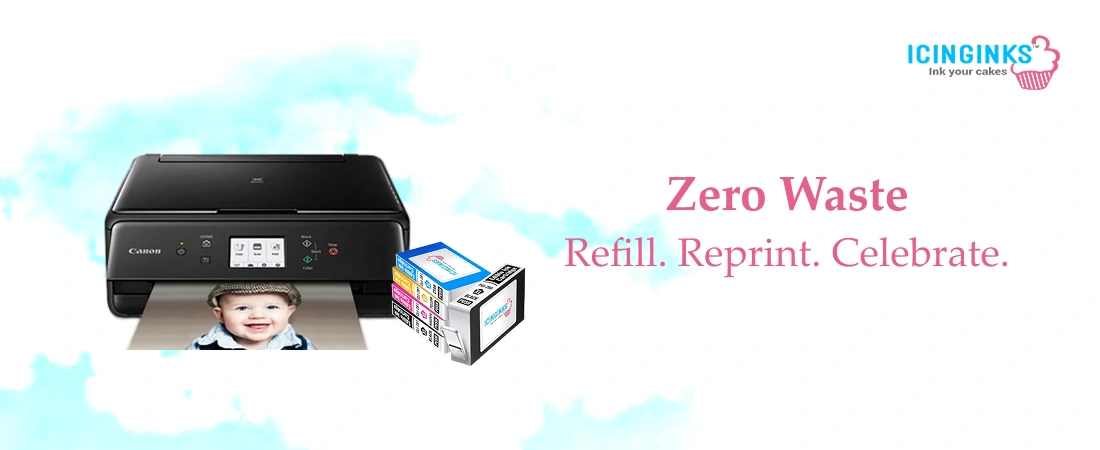
Not every baker needs their own printer. For those who decorate occasionally or want professional-quality results without investing in equipment, edible printing services offer a sustainable alternative. By outsourcing printing to a specialized provider, bakers avoid owning hardware that sits idle most of the time, consumes energy, and requires maintenance.
Professional edible printing services use food-safe edible ink, high-quality sheets, and calibrated printers to deliver vivid results consistently. Ordering only what is needed, rather than maintaining a full stock of supplies, keeps waste to a minimum. It is the on-demand model applied to cake decorating, and it fits beautifully into a low-waste workflow.
Why Choose Us: Because Not All Edible Supplies Are Created Equal
- Made in the USA: All edible ink cartridges are manufactured domestically under strict food-grade conditions, so you always know what is going on your cake.
- FDA Compliant & Allergen-Free: Every frosting sheet and edible ink product meets FDA standards and is gluten-free, dairy-free, and allergen-free.
- Vibrant, True-Color Printing: Precision-formulated edible ink delivers rich, accurate colors on the very first print, every single time.
- Refillable Cartridges, Zero Waste: Our auto-reset chip technology lets you refill and reuse cartridges instead of replacing them, saving money and cutting plastic waste.
- Built for Every Skill Level: From first-time home bakers to commercial kitchens, we have the right printer, supplies, and bundle for you.
- One-Stop Shop: Printers, cartridges, refill inks, frosting sheets, wafer papers, edible pens, cake paints, and custom printing, all in one place.
- Real Customer Support: We do not just sell, we guide you through every step of your edible printing journey.
- Free Shipping: Free ground shipping across the USA on all orders over $99.
FAQs
Q1. Is edible ink safe to consume?
Yes, absolutely. Edible ink used in food-safe printing is made from FDA-approved ingredients and food-grade colorants. At Icinginks, all edible ink cartridges are manufactured in the USA under strict food-grade production standards, making them completely safe for human consumption when used with compatible edible printers and food-safe sheets.
Q2. How long do edible ink cartridges last before they need replacing or refilling?
The lifespan of an edible ink cartridge depends on print volume and the complexity of designs being printed. On average, a standard cartridge can handle dozens to hundreds of prints before running low. With Icinginks refillable cartridges and auto-reset chip technology, you can simply top up the ink rather than replace the entire cartridge, significantly reducing plastic waste.
Q3. Can I use any printer with edible ink cartridges from Icinginks?
No. Edible ink cartridges must be used with a printer dedicated exclusively to edible printing. Icinginks cartridges are compatible with specific Canon and Epson printer models, as well as the Cookie Master professional food printer. Using edible cartridges in a printer that has previously used regular ink is unsafe and not recommended. Icinginks printer bundles come pre-configured for edible printing right out of the box.
Q4. What types of edible sheets work best for detailed photographic designs?
For photorealistic or highly detailed images, Prime Frosting Sheets from Icinginks are the preferred choice. They have a smooth surface that accepts edible ink with excellent color accuracy and detail retention. Clear Frosting Sheets are ideal when you want the cake color beneath to show through the design. Wafer paper works well for lighter, simpler designs and is the most environmentally minimal option available.
Q5. Do Icinginks edible printing services ship ready-to-use products?
Yes. We offer custom edible printing services to produce fully printed, food-safe edible images ready to be placed directly on your cake or baked goods. Products such as custom-printed frosting sheets, wafer sheets, cocktail toppers, and chocolate transfer sheets are prepared to order based on your design upload.
Similar Post:
Mistakes to Avoid When Using Edible Cake Paint
How to Use Edible Paint to Decorate Cakes Like a Pro
10 Amazing & Easy Easter Desserts Anyone Can Make
How to decorate a cake with Edible Icing and Edible inks?